
How to File a Berks County Public Records Request
For county agency records, Pennsylvania's Right-to-Know Law sets the process. The law, found at 65 P.S. sections 67.101 and following, gives the public a right to inspect and copy agency records, sets response deadlines, and provides an appeal when access is denied. Berks County accepts the Pennsylvania Office of Open Records universal request form.
The first step is to figure out what kind of record you want, since court records follow a different path. Then describe the record clearly so staff can find it. The steps below cover an agency request.
- Decide whether the record is a court record or a county agency record.
- Use the Pennsylvania Office of Open Records universal request form.
- Describe the records with enough detail to identify them.
- Submit by mail or hand delivery, email, or fax to the County Open Records Officer.
- Wait for the response within the statutory deadline, then appeal if denied.
The county notes that arrangements can sometimes be made to view documents at no charge, separate from copy fees.
Court Records vs County Agency Records
Pennsylvania splits records access into two tracks, and mixing them up causes most of the confusion. County executive and administrative records fall under the Right-to-Know Law. Court case records fall under the Unified Judicial System Case Records Public Access Policy instead. A divorce file or a criminal docket is a court record, not a routine Right-to-Know request.
Berks County sorts contacts by record owner. Criminal court records go to the Clerk of Courts. Civil and divorce records go to the Prothonotary. Judicial department records go to the Court Open Records Officer. Sheriff records go to the Sheriff's open records contact. Non-judicial county records go to the County Open Records Officer. For court files, the court records page covers the right custodian.
| Court Records | County Agency Records | |
|---|---|---|
| Governing rule | UJS Case Records Public Access Policy | Right-to-Know Law |
| Examples | Dockets, filings, case files | Deeds, budgets, minutes, contracts |
| Where to request | Clerk of Courts or Prothonotary | County Open Records Officer |
| Appeal path | Court policy or court order | PA Office of Open Records |
Picking the right track at the start saves the most time. A request for a divorce decree sent to the open records officer just gets routed back to the Prothonotary.
What County Agency Records Cover
County agency records reach into many corners of local government. Beyond the courts, the county keeps property and recording data, financial documents, and the paperwork of its boards and offices. The Right-to-Know Law treats many of these as public, subject to the law's exemptions. The list below shows common categories people request.
- Recorded land documents through the Recorder of Deeds.
- County budgets, contracts, and financial reports.
- Board and commission meeting minutes and agendas.
- Jail population reports and policy manuals through open records.
- Department records that are not part of a court case file.
Some records people expect at the county actually sit elsewhere. Birth and death certificates, for example, come from the state vital records system rather than the county. When a request lands in the wrong office, staff can often point you to the correct custodian.
County Open Records Request Fields
A written Right-to-Know request should carry a few standard pieces of information. The county uses the Office of Open Records universal form. The table below lists the fields and how to complete them for a Berks request.
| Field | Required | Notes |
|---|---|---|
| Requester name | Yes | The written request should include your name |
| Mailing address | Yes | Required for a written request |
| Phone or email | Yes | At least one contact method |
| Description of records | Yes | Detailed enough to identify the records |
| Submission method | Yes | Mail or hand delivery, email, or fax |
Submit to the County Open Records Officer, 14th Floor Services Center, 633 Court Street, Reading, PA 19601, by email at Countyopenrecordsofficer@berkspa.gov, or by fax at 610-478-6139.
Berks County Recorder of Deeds Search
Property records are some of the most-searched public records. The Berks County Recorder of Deeds keeps deeds, mortgages, liens, military discharges, and notary commissions. Its online search covers a remarkable span of records. The Recorder says every document recorded since the county's 1752 birth is indexed and imaged on its site.
The public search portal offers Quick Search and Advanced Search.
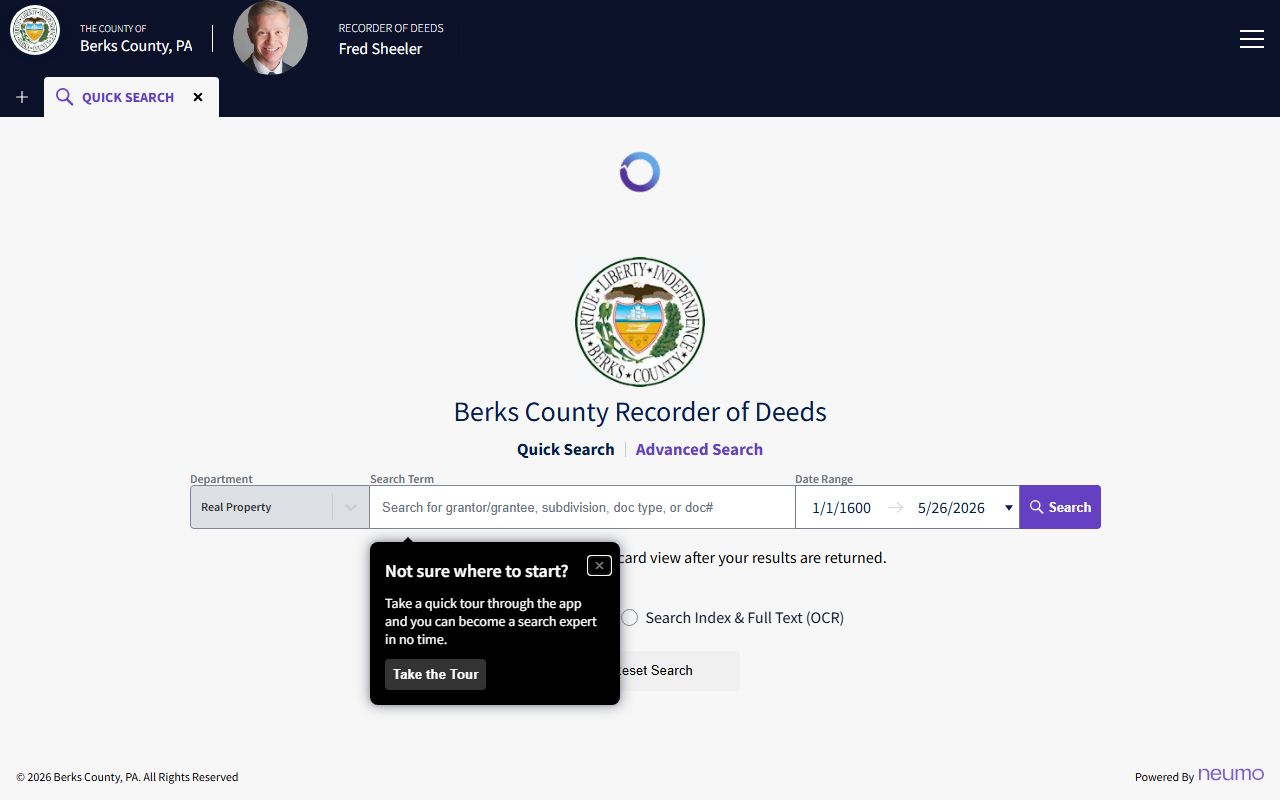
The Recorder of Deeds public search lets you search by department, term, and date range. The Recorder's main department page explains the office and its services.
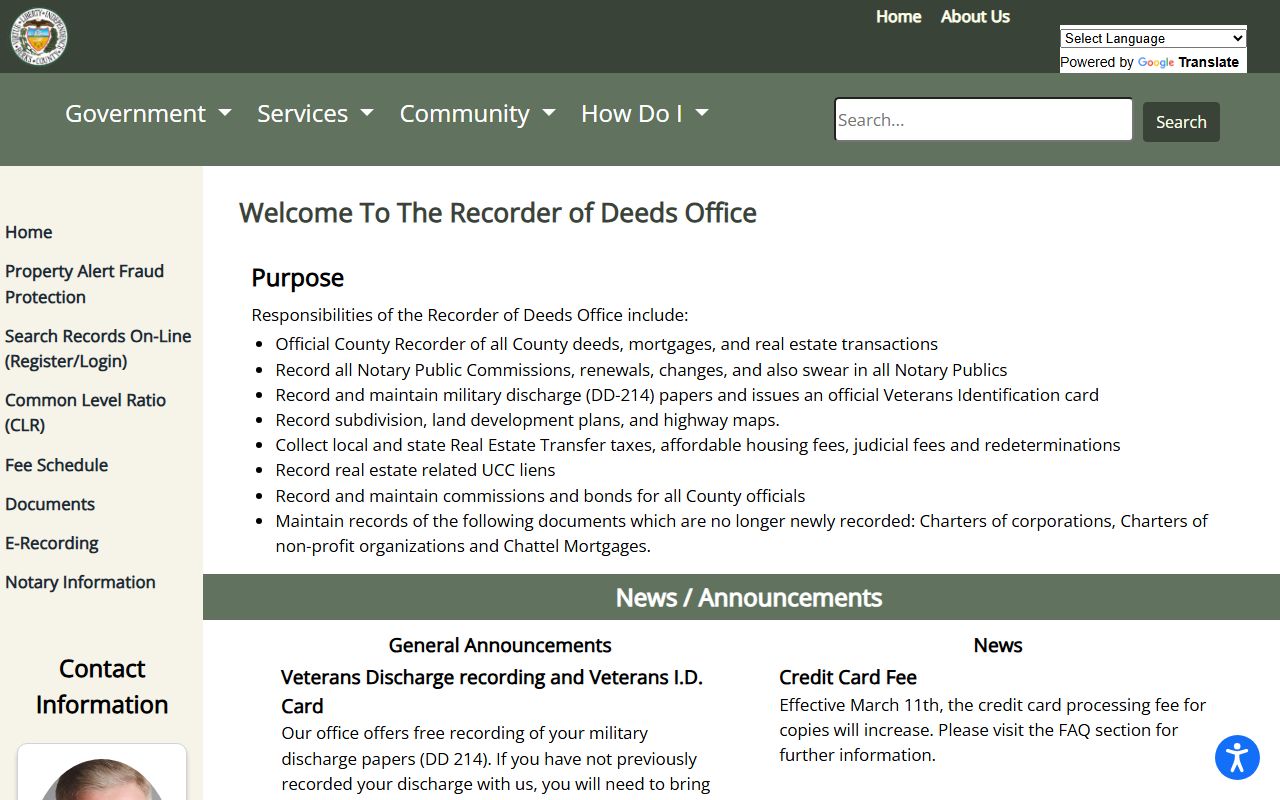
The Recorder of Deeds page is the place to start for land and related records, which are separate from court case files.
Recorder Fees and Copies
Searching the Recorder index is free, but copies and certifications carry fees. A certified online copy runs $10 per document, and a regular website copy is 50 cents per page. A credit card transaction adds a sliding fee that starts at $1.75 and can rise up to $50 for larger amounts. The table below sums up the common charges.
| Item | Amount |
|---|---|
| Certified online copy | $10 per document |
| Regular website copy | 50 cents per page |
| Credit card transaction fee | From $1.75, up to $50 |
The Recorder publishes its full fee schedule online.
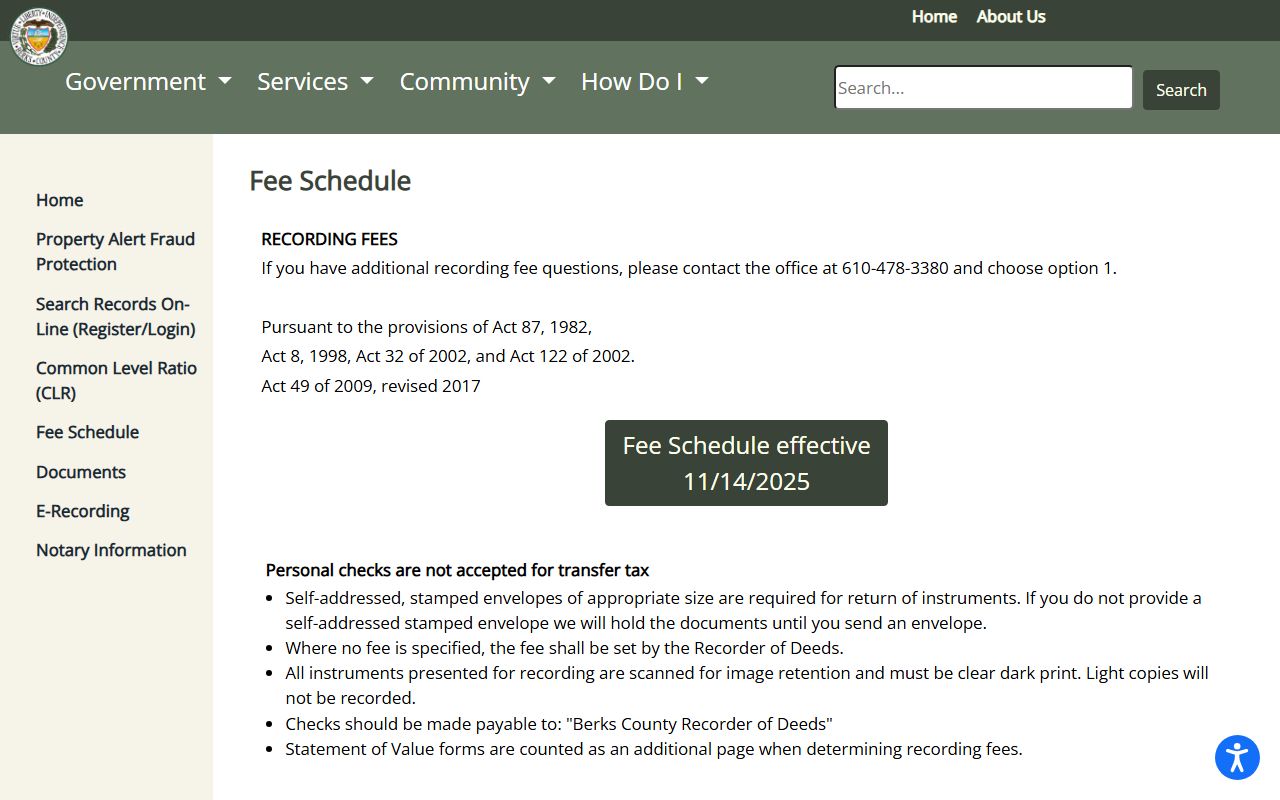
The Recorder fee schedule page lists current copy and recording charges, so check it before you order a document or record a new one. Recording fees differ from copy fees, and both can change, so the official schedule is the figure to trust.
Berks County Historical Records
Few counties can match Berks for record depth. The Recorder of Deeds preserved original record books from 1752 to 1953, kept records from 1953 through 2004 on microfilm, and holds 2004 to present records in digital form with backup. The Prothonotary's historical files run just as deep, with Appearance Dockets from 1754, Judgment Dockets from 1770, and Execution Dockets from 1768.
This continuity makes Berks County a strong source for genealogy, title research, and legal history. A researcher can trace property and civil matters across more than two and a half centuries, much of it through the online index. The Prothonotary's older records also include Mechanics Liens from 1836 and Sheriff Deeds, which can carry party names, attorney names, the nature of a complaint, and the money collected. For civil court history, the Prothonotary page describes its historical record holdings.
County Population and Demographic Data
Public records also include the data that describes the county itself. For population, households, income, and business figures, the U.S. Census Bureau QuickFacts page is the standard source. The numbers update on their own schedule, so pull the current table rather than relying on an old figure.
Census QuickFacts gives a quick statistical profile of Berks County.
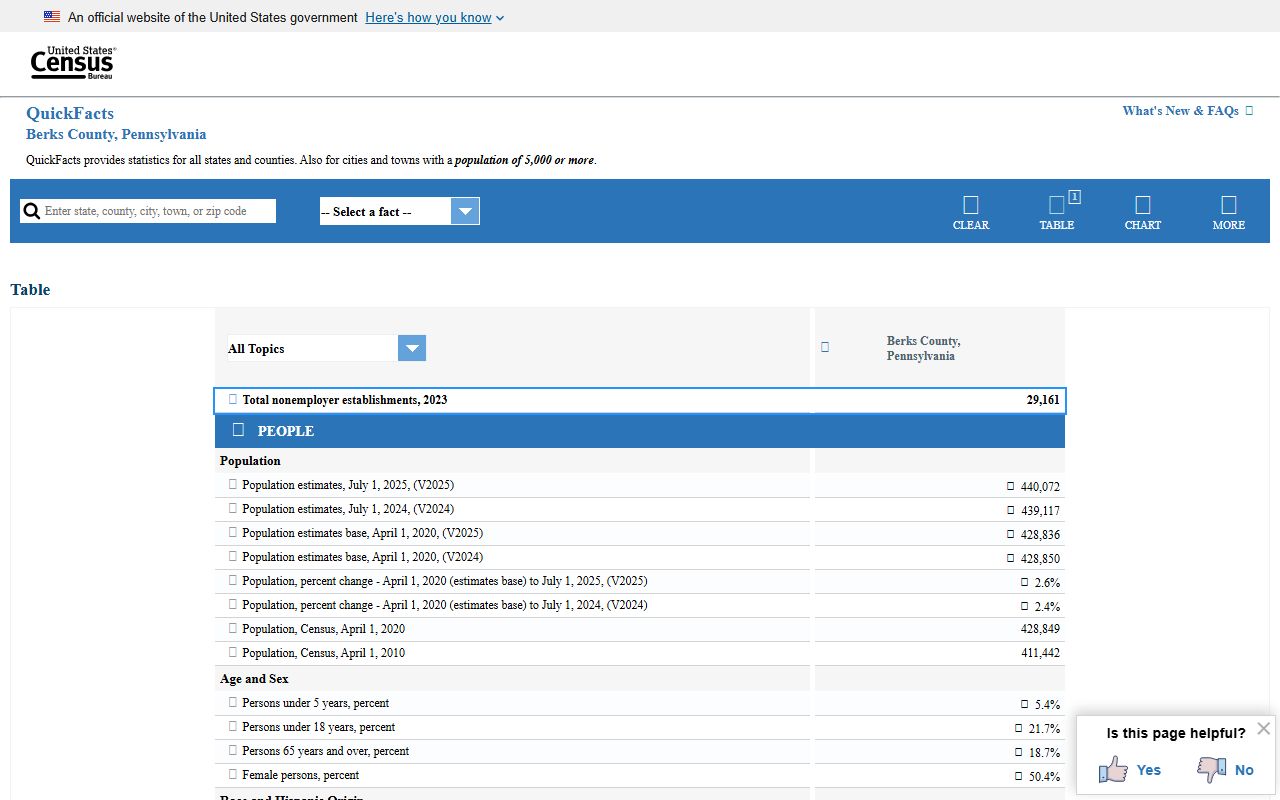
The Census QuickFacts table is useful background when you read county records in context, such as the jail data on the jail population page. A demographic share or an incarceration rate means little without the population behind it, so the Census figures help turn a raw count into something you can compare across counties and over time.
Confidential and Exempt Records
Not every record is public. The Right-to-Know Law and the court access policy each protect certain information. Criminal investigative records, personal identifiers, and records exempt by statute may be withheld or redacted. Court files have their own confidential categories, including juvenile, adoption, and sealed matters.
When an agency denies a request, it must give a reason. You then have an administrative appeal path through the Pennsylvania Office of Open Records for non-judicial agency records. Court record disputes follow the court access policy or a court order instead, not the ordinary Right-to-Know appeal.
The Right-to-Know Law also sets a timeline. An agency must respond within the statutory period, and it may grant the request, deny it, or ask for more time in limited cases. A clear, specific request gets a faster answer than a broad one, since a custodian can locate narrow records more easily. If you are unsure whether a record is public, it costs nothing to ask the open records officer before you file a formal request.
Legal Aid and Public Records Help
Some public records questions tie into a legal problem, and free help exists for income-eligible residents. MidPenn Legal Services provides free civil legal aid in Berks and nearby counties, covering housing, consumer, family, and benefits matters, plus expungement support through its LIVE project.
MidPenn explains its services and how to apply on its site.
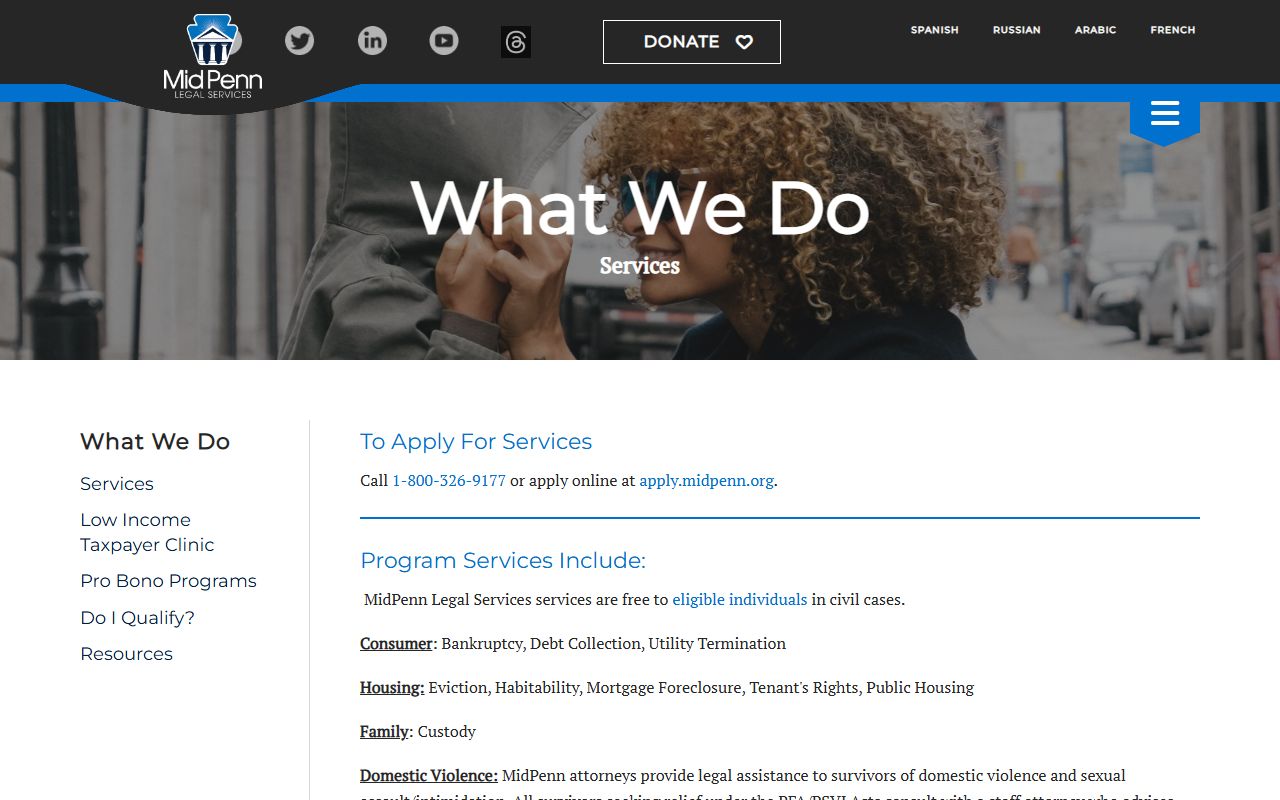
The MidPenn Legal Services page lists program areas and the apply line. For survivors of abuse, Safe Berks offers free, confidential legal advocacy.
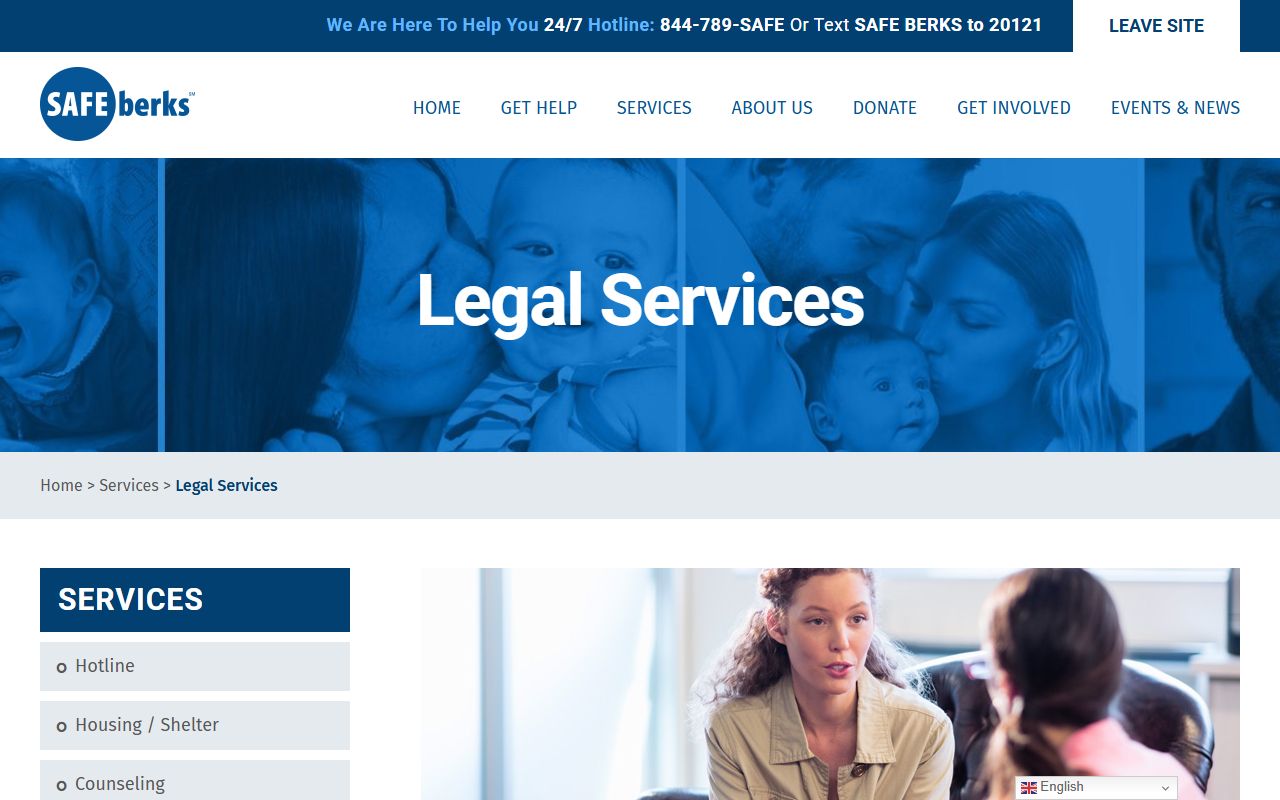
The Safe Berks legal services page covers protection order help and hotline support, available in all languages.