
How to Find Berks County Arrest Records
An arrest in Berks County leaves a trail in a few places. The Berks County Jail books people into custody around the clock. The Sheriff's Office runs central booking as one of its divisions. Once charges are filed, the case shows up on the statewide court portal. To find a recent arrest, start with custody status, then move to the court docket.
For custody, the county points to PA SAVIN through VINELink and the jail booking line. For the court side, the UJS Case Search lists criminal dockets by name, docket number, or Offense Tracking Number.
- Check jail custody through PA SAVIN or by calling the booking division.
- Search the court portal by participant name and set the county to Berks.
- Open the criminal docket to see the charges, the magisterial district, and the status.
- Request certified criminal copies from the Clerk of Courts.
For a full booking and roster walk-through, see the Berks County inmate records page.
Arrest Record vs Criminal Court Record
An arrest record and a criminal court record are not the same thing. The arrest record is the booking event. The court record is the case that may follow. One can exist without the other, and they live in different places. The comparison below sorts them out.
| Arrest Record | Criminal Court Record | |
|---|---|---|
| What it is | The booking and custody event | The charges and case in court |
| Custodian | Jail and central booking | Clerk of Courts via UJS docket |
| Shows guilt? | No | Only if there is a conviction |
| Where to look | Jail, PA SAVIN | UJS Case Search |
For the full case history, the Berks County court records page covers the criminal docket in depth.
Where Berks County Arrests Are Processed
Most criminal cases begin before a magisterial district judge. The MDJ handles the preliminary arraignment, sets and accepts bail, and holds the preliminary hearing. If the judge finds enough basis, the case is held for court and moves to the Court of Common Pleas. Berks also runs a Central Arraignment Court that serves as an after-hours duty court, and a Reading Central Court for preliminary hearings in city cases.
The Magisterial District Judge System page lists the local courts that handle these first steps.
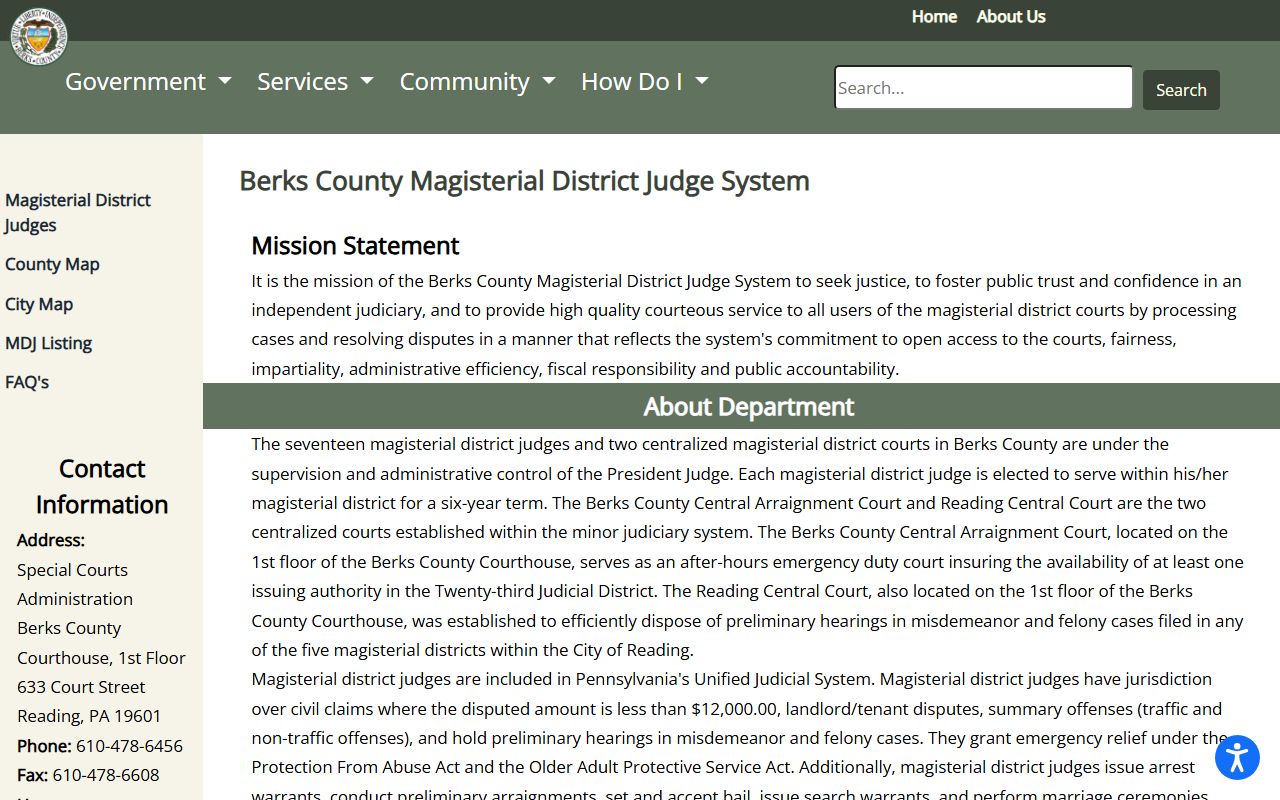
That early stage is where bail, warrants, and the first charges appear, before a case reaches the Clerk of Courts.
Charges vs Convictions in Berks County
A charge is an accusation. A conviction is a finding or admission of guilt. This difference matters more than any other on an arrest record. A docket can show charges that were later dismissed, withdrawn, or reduced. Reading only the charge and skipping the disposition gives a false picture.
| Charge | Conviction | |
|---|---|---|
| Meaning | An accusation filed by police or the DA | A guilty finding or guilty plea |
| Stage | Early in the case | After plea or trial |
| On the docket | Listed as a charge with a grade | Shown in the disposition |
| Effect | Case may still be dropped | Sentence and record follow |
Always read the disposition next to each charge before you draw a conclusion about a case.
What a Berks County Arrest Record Includes
A criminal docket built from an arrest carries a set of standard fields. Some come from the arrest itself, like the Offense Tracking Number and the complaint number. Others build up as the case moves, like the plea and the sentence. The list below shows the fields you can expect to find on a Berks criminal record.
| Field | What It Shows |
|---|---|
| OTN | Offense Tracking Number used across Pennsylvania criminal processing |
| Complaint / Incident Number | The police charging or incident identifier |
| Charges and Grade | Each offense, its statute, and whether it is a summary, misdemeanor, or felony |
| Plea | The defendant's answer to the charges |
| Disposition | Guilty, not guilty, dismissed, withdrawn, or diverted |
| Sentence | Jail, probation, fines, costs, or restitution |
| Bail | The amount and conditions set for release |
The same docket links the magisterial district court that handled the early stages to the Common Pleas case that followed. That link helps you trace a case from arrest to sentence.
Mugshots and Booking Information
Booking photos and intake data are part of the arrest process, but Berks County does not publish a public mugshot gallery or a county-hosted roster with full booking profiles. The official jail pages point to PA SAVIN through VINELink for custody and release status, not to downloadable booking sheets. Third-party mugshot sites are not official and are not used here.
To confirm whether someone is in custody, call the jail booking division or register on PA SAVIN. Booking and intake run 24 hours a day. For the contact details and the lookup tools, the Berks County inmate records page is the better stop.
Defense and the Public Defender
People arrested in Berks County have a right to counsel. Those who cannot afford a lawyer can apply to the Public Defender. Keith A. McConnell is the Chief Public Defender. The office represents people in criminal and juvenile cases, preliminary hearings, trials, appeals, and mental health commitment proceedings.
The Berks County Public Defender takes non-custody applications in person or online, and in-custody applications at the jail.
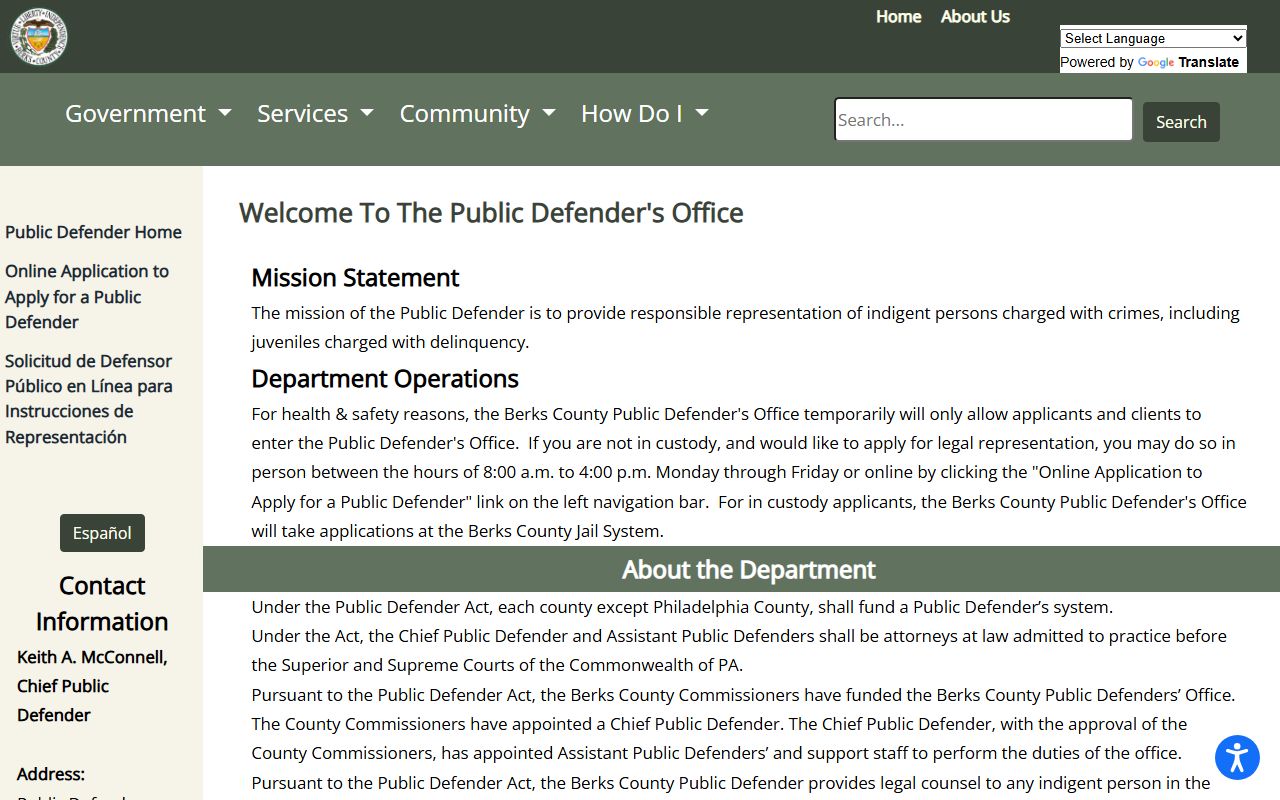
Applicants give verified financial information, and the office provides counsel once it finds the person indigent.
Probation, Parole, and Supervision
After a conviction, many people in Berks County serve time on supervision rather than behind bars. Adult Probation and Parole supervises more than 5,000 individuals across the county. The office uses evidence-based practices, treatment, and cognitive behavioral work to lower repeat offending.
The Adult Probation and Parole office tracks compliance with court orders.
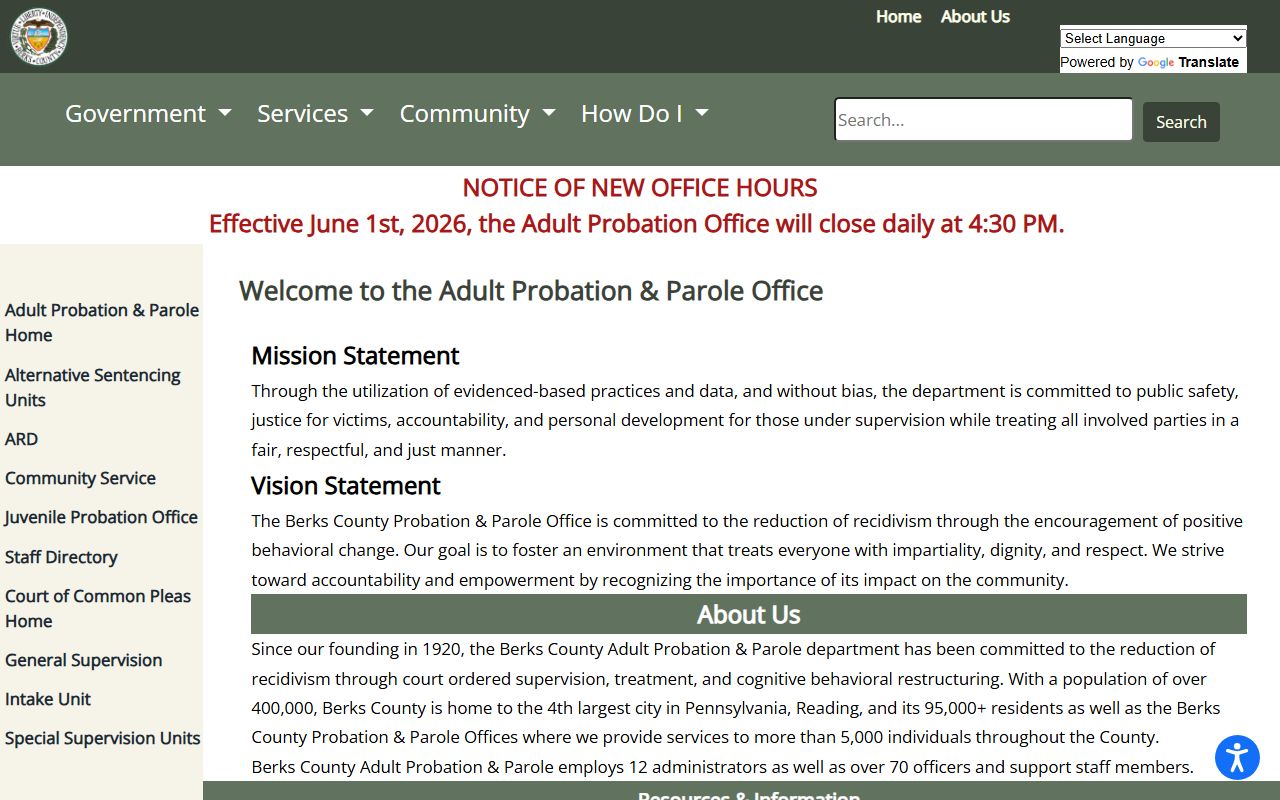
A missed condition or a missed payment can trigger a bench warrant, so supervision status connects directly to the court record.
Treatment Courts and Diversion
Not every Berks County case ends in jail. Treatment courts offer a supervised path for people with substance abuse and mental health needs. The program blends close judicial oversight, drug testing, treatment, and incentives. Tracks include a DUI Court, a Women's Drug Court, and the Veterans Treatment Court.
The Adult Probation treatment courts page names each track and the team behind it.
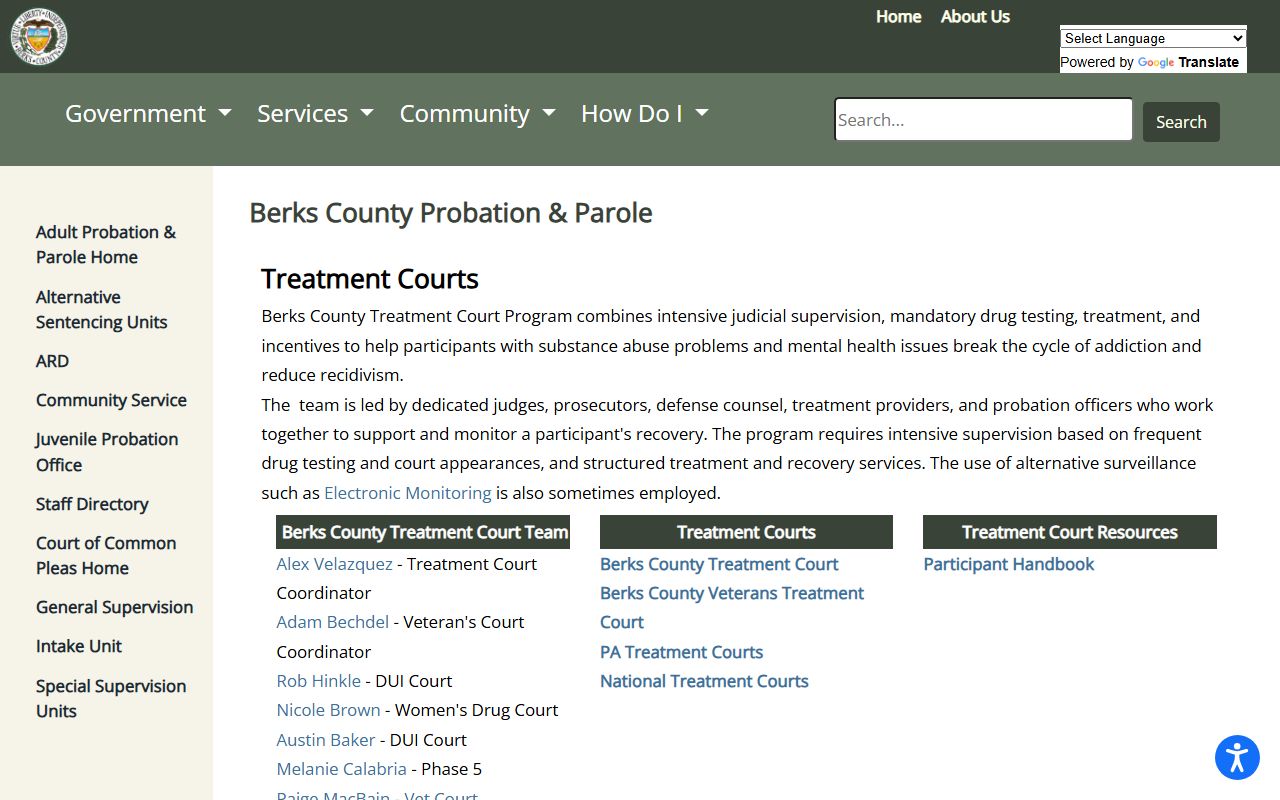
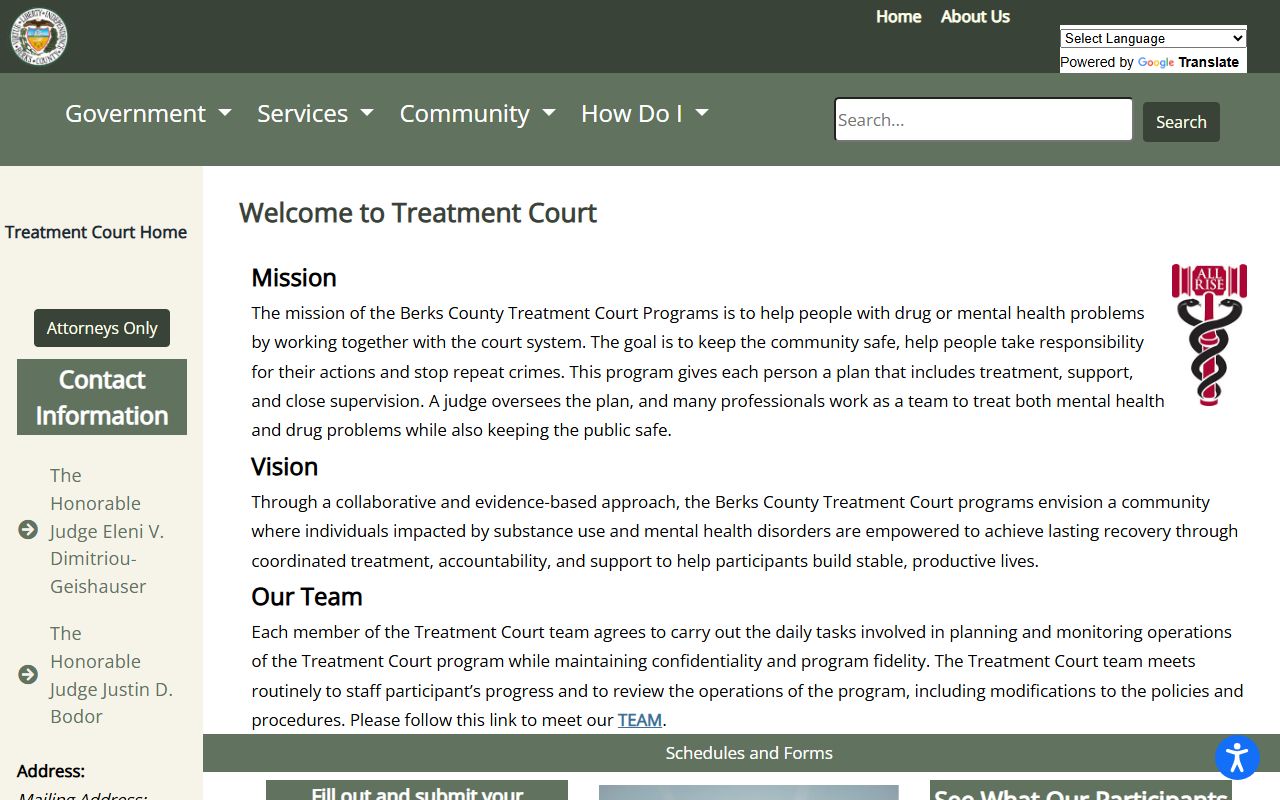
The county also runs a dedicated Treatment Court office with its own program structure.
The Treatment Court program uses a coordinated, evidence-based approach.
A case that goes through treatment court may end with a different disposition than a standard criminal case.
Sealed vs Expunged Arrest Records
Pennsylvania offers two ways to limit an old record: expungement and limited access. They are not the same. Expungement removes qualifying records. Limited access, also called Clean Slate, restricts who can see them while keeping them for justice agencies. The comparison below shows the difference.
| Limited Access (Sealed) | Expunged | |
|---|---|---|
| Statute | 18 Pa.C.S. §§ 9122.1, 9122.2 | 18 Pa.C.S. § 9122 |
| Effect | Hidden from public, kept for agencies | Removed from the public record |
| Public search | Does not display | Does not display |
| Who still sees it | Courts, police, some licensors | Limited list where authorized |
Expungement runs through the Court of Common Pleas where the case occurred, and the Clerk of Courts processes the signed order. You can read the law at 18 Pa.C.S. § 9122.
The Berks County Expungement Process
Clearing an old record in Berks County follows a set path. A petitioner files in the Court of Common Pleas where the criminal case happened. The Clerk of Courts handles the criminal file and the signed court order. Once the Pennsylvania State Police receive that signed order, the record is expunged from the state criminal history. The process reaches Pennsylvania records only, not out-of-state or federal records.
Eligibility depends on the offense and the outcome. Certain summary convictions after a waiting period, non-conviction dispositions, and completed diversion programs can qualify. Common reasons a petition is denied include an ineligible offense grade, unpaid restitution, a new conviction during the waiting period, or a wrong docket or OTN on the paperwork. Because the rules are detailed, many people apply with help from an attorney or a legal aid program such as MidPenn Legal Services.
Criminal History and Background Checks
A court docket is not the same as a full criminal history. The Pennsylvania State Police hold the statewide criminal history record. Sharing of that record is set by 18 Pa.C.S. § 9121, which limits what the state can release and to whom. For a background check, the state record is the official source; the county docket is only the local piece.
Employers and the public use these records under strict rules. This site is not a consumer reporting agency, and its information cannot be used for hiring, housing, or credit decisions. For warrant questions, see the Berks County warrant records page, and for traffic-linked DUI matters, see traffic court records.
If a record looks wrong, the fix depends on the source. For a court docket error, contact the Clerk of Courts that keeps the file. For a state criminal history error, the correction runs through the Pennsylvania State Police. A public search that fails does not always mean no case exists, since juvenile, sealed, expunged, and limited access matters drop out of public results. Bring the docket number or OTN when you call, and be ready to show who you are if the record is restricted.