
About the Berks County Prothonotary
The Prothonotary is the chief civil clerk and record keeper for the Court of Common Pleas in Berks County. The office handles the civil and family side of the court, not the criminal side. It sits on the 2nd floor of the courthouse at 633 Court Street in Reading. The contact card below has the core details.
Berks County Prothonotary
Courthouse, 2nd Floor, 633 Court Street
Reading, PA 19601
610-478-6970
Mon-Fri 8:00 AM - 4:00 PM
The office reviews pleadings for compliance with Pennsylvania and Berks County civil rules, then collects fees and remits revenue to the county and the state. The Prothonotary page also links attorney e-filing, divorce and custody self-help, Protection From Abuse information, historical records, and docket access, so it serves as a hub for the civil side of the court.
What the Berks County Prothonotary Does
The Prothonotary touches almost every civil matter in the county. It files and processes the cases, records the court's decisions, and gives notice to the parties. The duties below capture the main work of the office.
- File and process civil actions, family matters, and equity cases.
- Record judgments, orders, and decrees of the court.
- Enter and track federal, state, and local tax liens and municipal liens.
- Handle arbitration, license suspension appeals, and appeals to higher court.
- Issue writs and other process, and collect filing fees.
The office also sends notice of entries to parties or counsel by email or mail, which is how many people first learn that a judgment or order has been recorded.
Types of Civil Records at the Prothonotary
The civil docket covers a wide range of cases, and the Prothonotary keeps the file for each. Knowing the category helps you describe the record you need. Civil filings run from money disputes to family matters to liens against property. The list below shows the main types the office holds.
- Civil complaints, answers, motions, orders, and judgments.
- Divorce, custody, and other family court filings.
- Federal, state, and local tax liens and municipal liens.
- Arbitration matters and license suspension appeals.
- Appeals to higher court and various writs.
Protection From Abuse matters also move through the court and the Prothonotary or Family Court workflow. Some of these files carry confidential information, so the public docket may not equal the full file.
How to Request a Certified Copy
A certified copy is the version courts and agencies accept as official. People need them for appeals, property matters, and proof of a judgment or divorce. The Prothonotary issues certified civil copies once you identify the case. The steps below outline the request.
- Find the case and docket number, using the statewide court portal if needed.
- Contact or visit the Prothonotary on the 2nd floor of the courthouse.
- Identify the document you want and the number of certified copies.
- Pay the fee set in the current Prothonotary fee bill.
- Pick up the copy or arrange to receive it by mail.
For help locating the docket first, the court records and court dockets pages walk through the portal.
Records Request Information
To pull a civil record, the office needs enough detail to find it. The more you bring, the faster the search. The table below lists the information that helps a Prothonotary request go smoothly.
| Field | Required | Notes |
|---|---|---|
| Docket Number | Helpful | The cleanest way to find a civil case |
| Party Names | Yes | Plaintiff and defendant, or the family case parties |
| Document Type | Yes | Judgment, complaint, order, divorce decree, or lien |
| Number of Copies | Yes | Certified copies are priced per the fee bill |
| Approximate Filing Year | Helpful | Narrows the search for older cases |
For a civil or family record request under the court access policy, you can often make an oral request, though a large or complex one may need writing.
Berks County Prothonotary Fees
Civil filing and copy fees are set in the current Prothonotary fee bill, which took effect January 1, 2026. The bill covers civil and family filing categories, copies, and certifications. Because the schedule changes, confirm the current amount before you pay. One fixed charge worth noting is the returned check fee.
| Item | Amount |
|---|---|
| Returned check fee | $50 |
| Civil and family filing fees | See current Prothonotary fee bill |
| Certified copies | See current Prothonotary fee bill |
The Prothonotary page links the fee bill directly, so check it before mailing a filing or a copy request.
Civil and Family E-Filing
Attorneys file civil and family documents electronically with the Prothonotary. Self-represented filers currently submit custody and divorce documents by mail or in person. The county has said self-represented filers will be allowed or required to e-file after August 1, 2026, once it posts notice on the Prothonotary website.
That change will bring self-represented filers in line with attorneys for many filings. Until then, the mail and in-person options remain open. For the divorce and custody process itself, the marriage and divorce records page covers the steps.
When you file, the office reviews the pleading for compliance with state and county civil rules before it accepts the filing. A filing that misses a required form or fee can be returned, which adds delay. For that reason, self-represented filers often start with the Family Court self-help packet or a short consult with counsel. The current fee bill controls the cost, so use the live schedule rather than an older figure from another source.
Judgments and Liens in Berks County
One of the Prothonotary's most-used functions is recording judgments and liens. When a court enters a money judgment, the Prothonotary records it. A recorded judgment can become a lien against property in the county, which is why title searches and credit checks turn up Prothonotary records. The office also enters tax liens and municipal liens filed against people and property.
When a judgment is paid, a satisfaction is filed to show the debt is cleared. People search these records to confirm whether a lien or judgment is open, to clear title before a sale, or to enforce a judgment they hold. Because liens attach to property, the Prothonotary records pair closely with the Recorder of Deeds records covered on the public records page.
Prothonotary Historical Records
The Prothonotary holds deep historical civil records, a strong resource for researchers. Its historical files include Appearance Dockets from 1754 to 1950, Judgment Dockets from 1770 to 1956, and Execution Dockets from 1768 to 1960. The office also keeps Mechanics Liens from 1836 to 1937 and Sheriff Deeds with grantor and grantee index content.
These records can carry court terms, party and attorney names, the nature of a complaint, the disposition, lien details, and money collected. For property-related history, they pair well with the Recorder of Deeds, covered on the public records page.
Self-Help and the Law Library
People handling a civil case without a lawyer can use county self-help resources. The Berks County Law Library is a department of the 23rd Judicial District Court of Common Pleas. It provides a computer with legal research access, though it is not staffed and cannot give legal assistance, forms, or copies.
The Law Library page links court, self-help, and bar association resources.
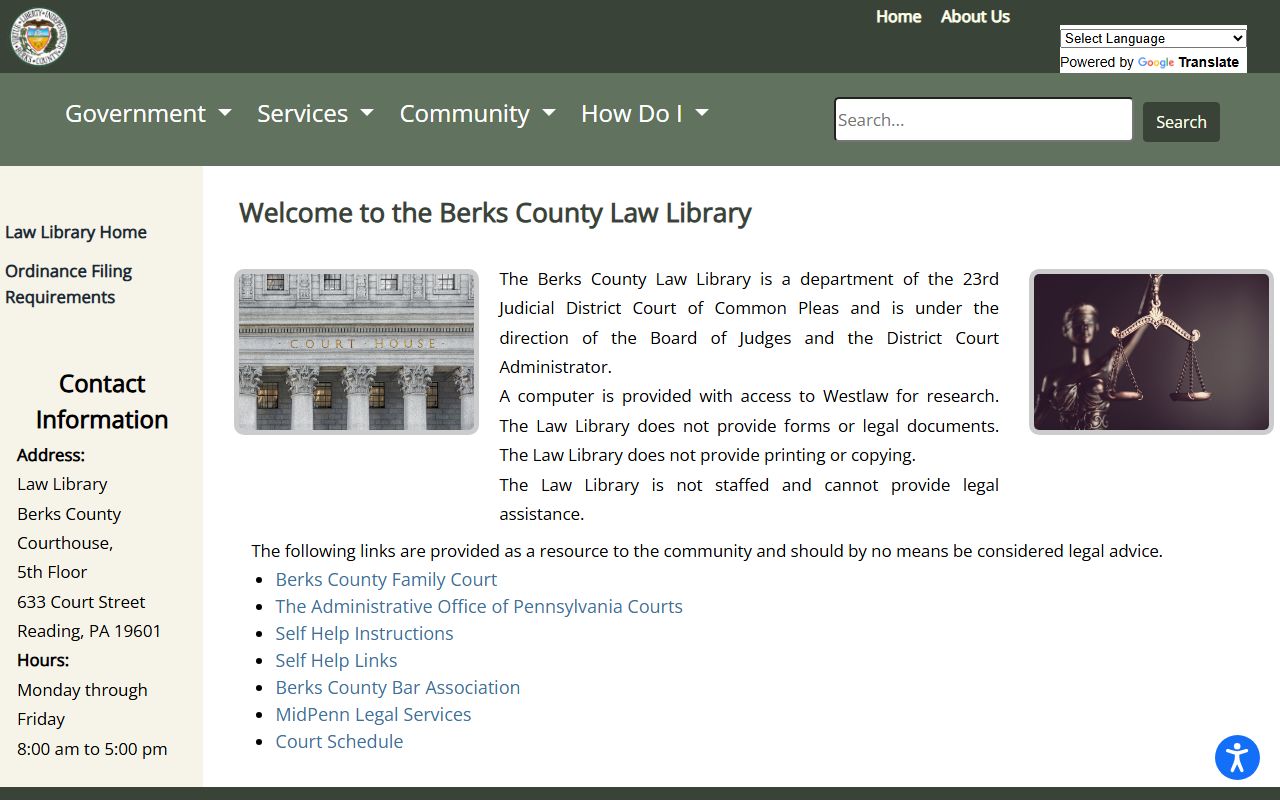
The Berks County Law Library page points to the Bar Association Lawyer Referral Service at 610-375-4591 and to MidPenn Legal Services for income-eligible filers.
Federal Civil Cases
Not every civil case is a county matter. Federal civil cases from Berks County are handled by the U.S. District Court for the Eastern District of Pennsylvania, which has a courthouse in Reading. Those records are not kept by the Prothonotary. They live on PACER, the federal case access system.
You search federal civil and other dockets through PACER.
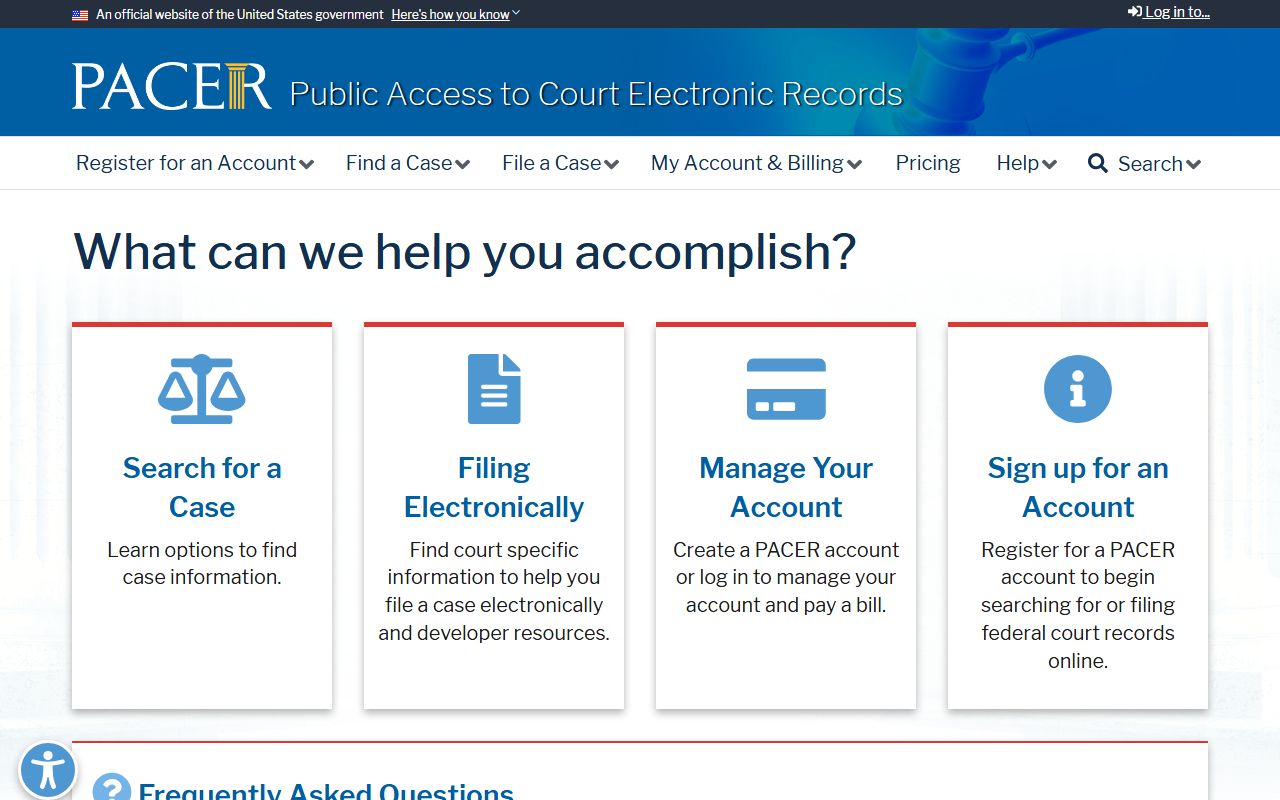
The PACER system covers federal dockets and documents. The federal trial court that hears Berks cases publishes its own information online.
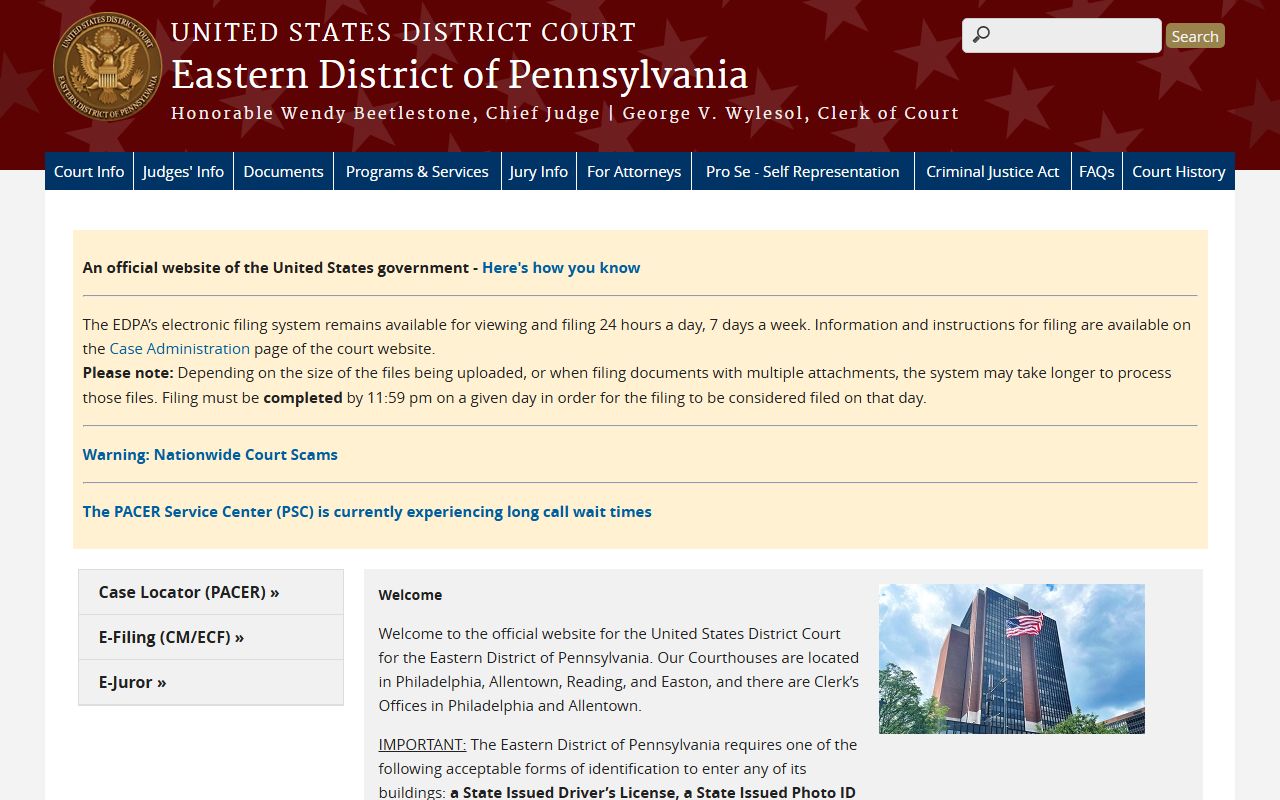
The Eastern District of Pennsylvania court handles federal civil matters that the county Prothonotary does not.
Prothonotary vs Clerk of Courts
The split between the two clerks confuses many people. The Prothonotary keeps civil and family records. The Clerk of Courts keeps criminal records. They sit on different floors and have different phone lines. The comparison below sorts them out.
| Prothonotary | Clerk of Courts | |
|---|---|---|
| Records | Civil and family | Criminal |
| Examples | Divorce, judgments, liens | Felonies, fines, costs |
| Floor | 2nd floor courthouse | 4th floor courthouse |
| Phone | 610-478-6970 | 610-478-6550 |
For the criminal side, see the Berks County Clerk of Courts page, and for the trial court itself, the Court of Common Pleas page.